

Material Intelligence: The Future of Advanced Textiles and Trend Forecasting Solutions
A New Trend Incubators Report by C2 Fashion Studio Trend Intelligence
Material innovation is becoming one of the most influential forces shaping the future of fashion and textile design. The new Trends Incubator Report by C2 Fashion Studio Trend Forecasting Solutions, titled Material Intelligence Shaping the Future of Advanced Textiles, explores how emerging materials are transforming fabrics into responsive systems capable of interacting with the human body and the surrounding environment.
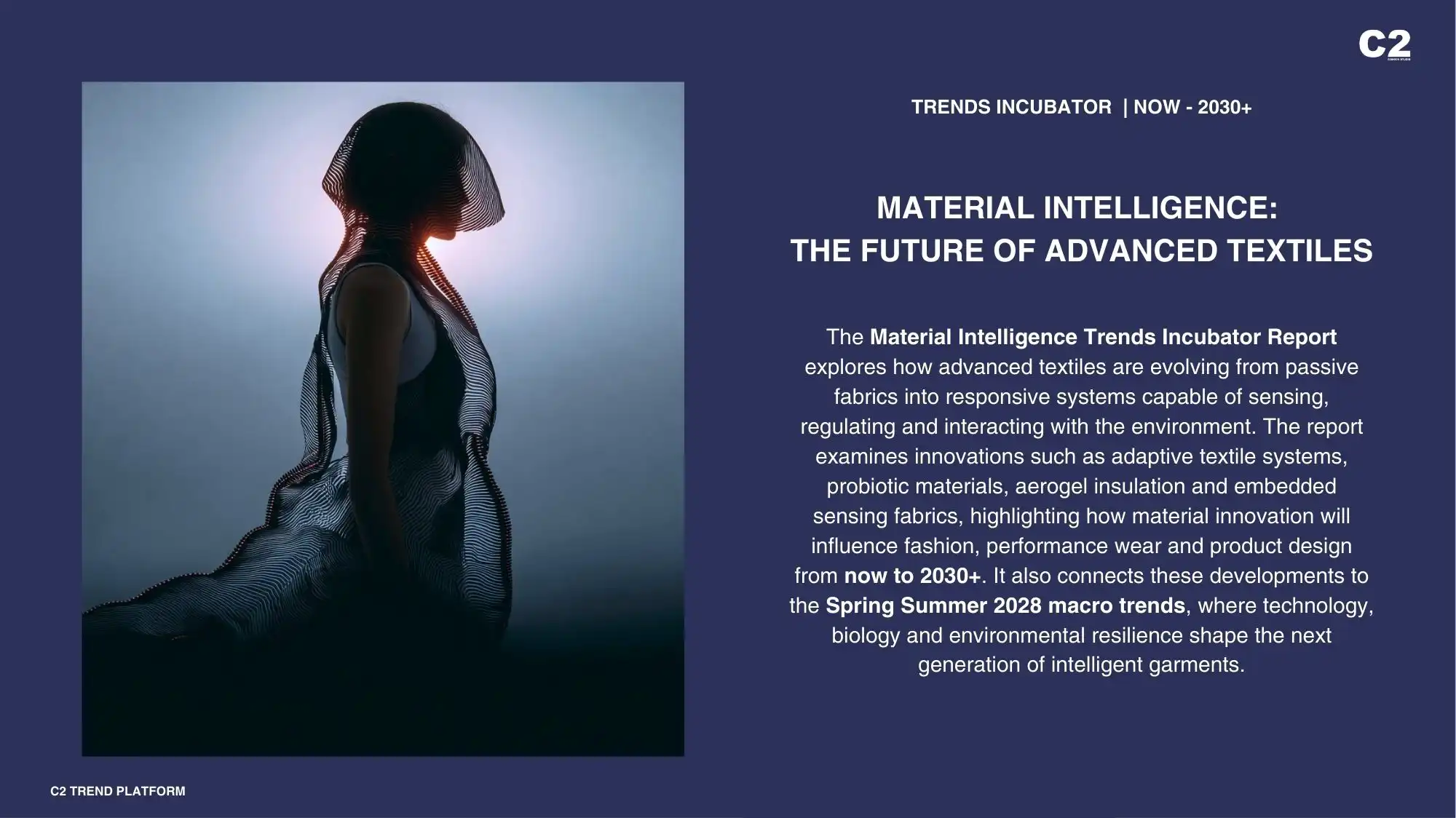
The report will be available on the C2 Trend Platform from March 16, offering an overview of the textile technologies expected to influence fashion, performance apparel, and product design from now to 2030+.
Traditionally, textiles were selected primarily for aesthetic qualities, comfort, and durability. Today, however, materials are evolving into functional surfaces that respond to environmental conditions, regulate body temperature, and integrate technological capabilities. Advances in smart materials, biotechnology, and textile engineering are enabling fabrics to behave more like adaptive systems than passive layers.
This technological evolution also aligns with the broader Spring Summer 2028 macro trend vision identified by the C2 Fashion Studio Trend Intelligence. Within the macro trends of Human Command Systems, Bio-Symbiotic Realism, and Stabilizing Cultures, materials play a key role in supporting human well-being, biological integration, and environmental resilience. Intelligent textiles, therefore, become an essential tool for creating garments that balance technology, nature, and stability in everyday life.
Adaptive Textile Systems and Responsive Materials
One of the key directions explored in the report is the development of Adaptive Textile Systems, where fabrics respond dynamically to temperature, humidity and body movement.
Shape Memory Textiles and Responsive Membranes
Shape memory textiles represent a significant innovation in this field. These materials can return to a programmed shape when exposed to heat or mechanical stimuli. In apparel applications, this allows garments to subtly adjust their structure depending on environmental conditions or body activity.
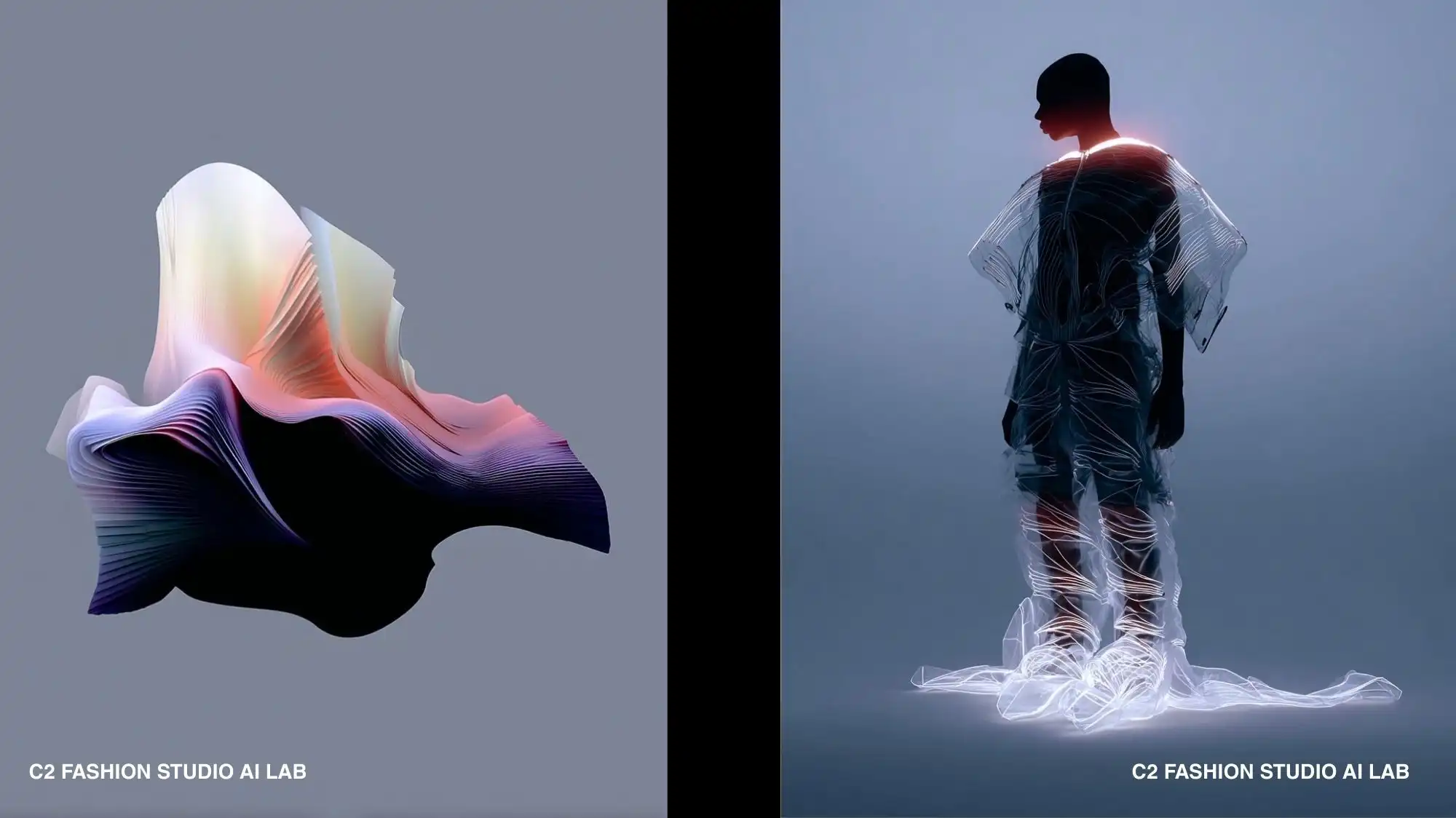
Examples include fabrics that:
- Open micro-ventilation zones when body temperature rises
- Adjust fit and support during movement
- Regulate airflow to maintain comfort
Another promising development is the use of responsive polymer membranes, which react to humidity and temperature at a microscopic level. These membranes increase breathability when the body overheats and tighten when temperatures drop, helping garments maintain a balanced internal microclimate.
Together, these technologies enable textiles to function as microclimate regulators, improving comfort across sportswear, protective clothing, and everyday garments.
Bio-Synthetic Materials and Emerging Textile Ecosystems
The report also examines the rapid development of Bio-Synthetic Material Ecosystems, where biological processes inspire new fibres and fabrics.
Probiotic Textiles and Protein-Based Fibres
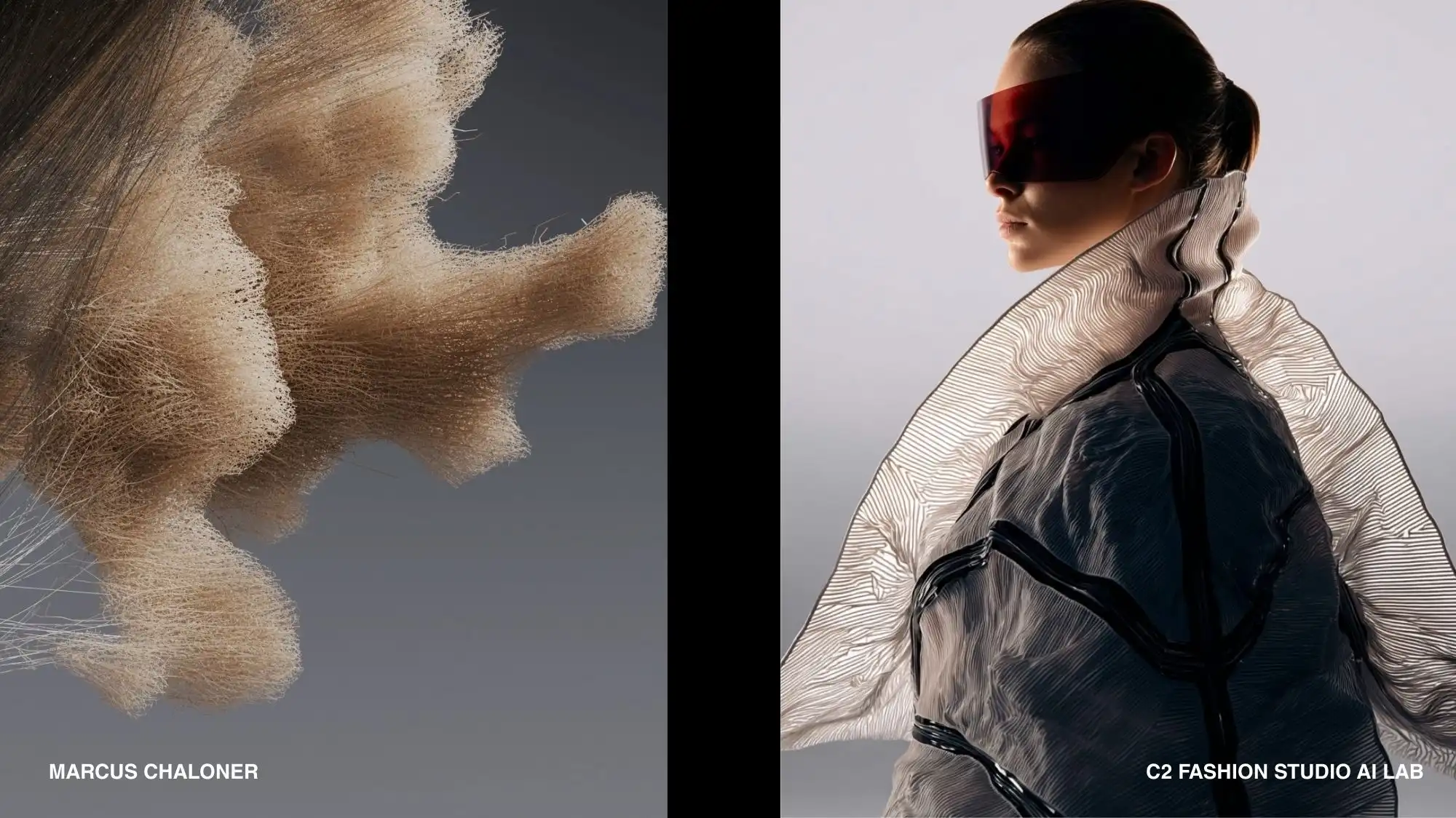
Innovators are increasingly looking to natural structures such as skin, plant fibres and marine organisms when developing advanced materials. These research directions aim to combine comfort, performance and environmental compatibility.
Key emerging materials include:
- Protein-based fibres derived from keratin, collagen and silk proteins
- Hydrogel textile surfaces that retain moisture and provide cooling effects
- Probiotic textiles designed to interact with the skin microbiome
- Mycelium-based materials offering biodegradable alternatives to leather
These innovations point toward textiles that interact more closely with the human body and support biological balance during wear.
Smart Textiles and Climate-Responsive Fabrics
Another important direction highlighted in the report is the development of smart textile technologies capable of sensing environmental conditions and responding accordingly.
Embedded Sensing Fabrics and Aerogel Insulation
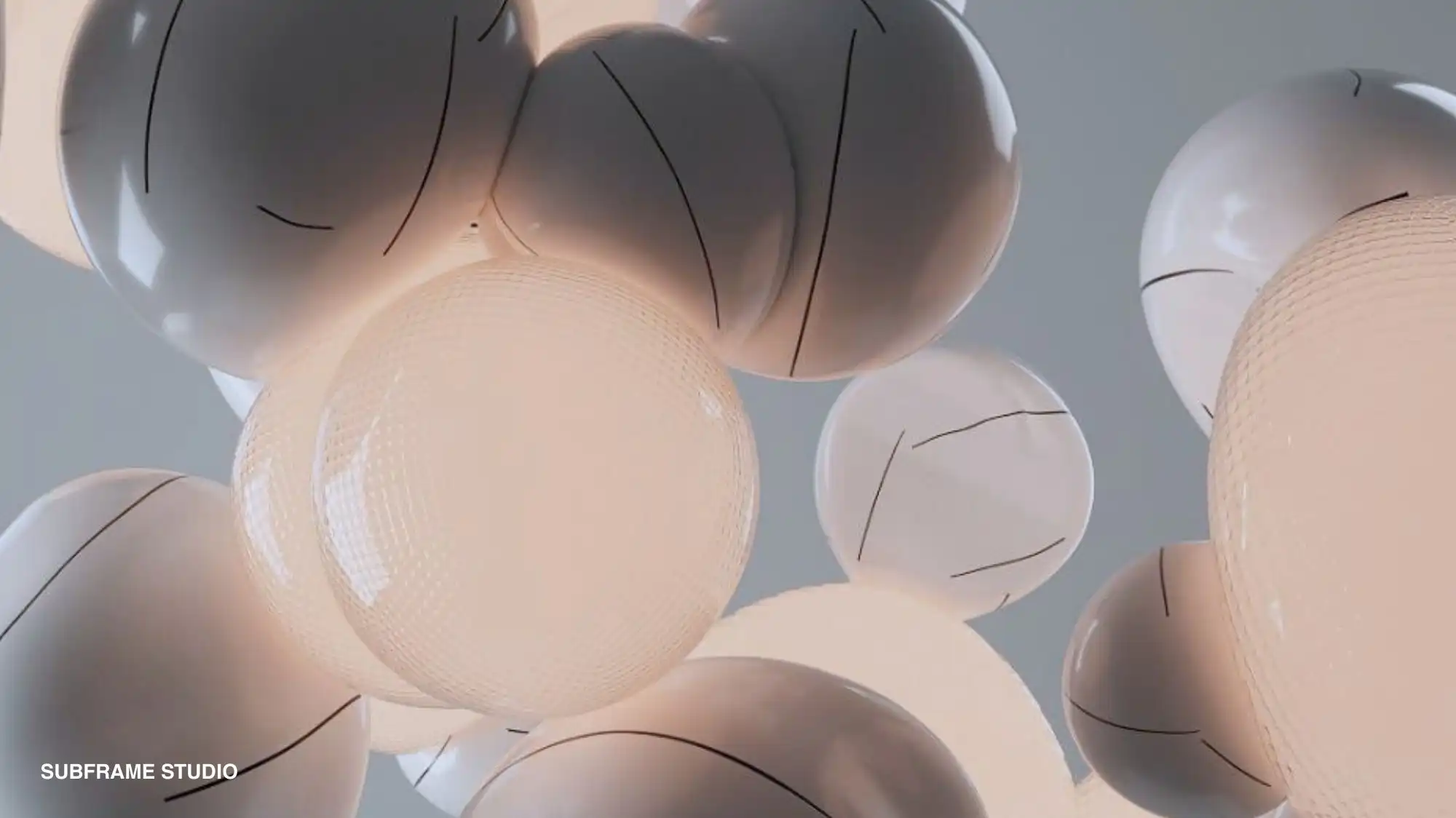
Advances in conductive yarns and flexible electronics are enabling the creation of embedded sensing fabrics that monitor body movement, posture and physiological signals.
These technologies are expected to support innovation in:
- Sports performance apparel
- Healthcare wearables
- Rehabilitation monitoring systems
The report also highlights the use of aerogel-based materials, which provide exceptional thermal insulation while remaining extremely lightweight. Originally developed for aerospace applications, aerogels are now being integrated into textile structures to create highly efficient insulating layers.
Additional developments include embedded UV protection, pollution-filtering fabrics and thermal reflective surfaces, which help garments adapt to changing environmental conditions, particularly in dense urban environments.
The full Trends Incubator Report – Material Intelligence Shaping the Future of Advanced Textiles will be available on the C2 Trend Platform from March 16, offering deeper insights into the technologies and materials shaping the next generation of Trend Forecasting Solutions for fashion and textile innovation from now to 2030+.
As highlighted by the C2 Fashion Studio Trend Intelligence, the future of fashion will increasingly be defined not only by design aesthetics but by the intelligence embedded within materials themselves.
Frequently Asked Questions
What are smart textiles and how will they impact fashion by 2030?
Smart textiles are fabrics engineered with technologies that allow them to sense, respond and adapt to environmental or bodily conditions. In fashion trend forecasting, these materials represent a major innovation area. Many trend forecasting solutions highlight smart textiles as a key driver shaping performance apparel, wearable technology and advanced clothing from now to 2030+.
How do adaptive textiles regulate body temperature?
Adaptive textiles regulate body temperature through technologies such as responsive membranes, shape-memory fibres and advanced ventilation structures. These fabrics adjust airflow, insulation and moisture management according to body heat and environmental conditions. Many trend forecasting solutions identify adaptive thermoregulation as a critical innovation for sportswear, mobility garments and climate-responsive fashion.
What are probiotic textiles and how do they work?
Probiotic textiles are fabrics that incorporate beneficial microorganisms designed to interact with the skin microbiome. These materials help regulate bacterial balance, reduce odour and support skin health. In fashion trend forecasting, probiotic textiles represent an emerging category of bio-interactive materials frequently highlighted in advanced trend forecasting solutions.
How will aerogel materials influence future clothing?
Aerogel materials are ultra-light insulating substances originally developed for aerospace applications. When integrated into textile structures, aerogels provide exceptional thermal protection with minimal weight. Many trend forecasting solutions identify aerogel-based fabrics as a key innovation shaping outerwear, technical apparel and performance fashion from now to 2030+.
How can I find the Material Intelligence Trend Incubators Report?
The Material Intelligence Shaping the Future of Advanced Textiles report is available on the C2 Trend Platform starting March 16 within the Trend Incubators section. Developed by C2 Fashion Studio Trend Intelligence, the report is part of C2’s advanced trend forecasting solutions, providing professionals with insights into emerging materials shaping fashion and design from now to 2030+.
Views


Trend Forecasting Intelligence
C2 Trend Platform.
Structured trend forecasting for clarity, product direction, and collections aligned with future demand.
Trend Forecasting Intelligence