

Digital Product Passports: Why Fashion Brands Must Prepare Now for a Data-Driven Future
The fashion industry is entering one of its most significant transformations in decades. While much attention has focused on sustainability, circularity, and regulatory compliance, a new strategic asset is emerging at the center of this evolution: the Digital Product Passport (DPP).
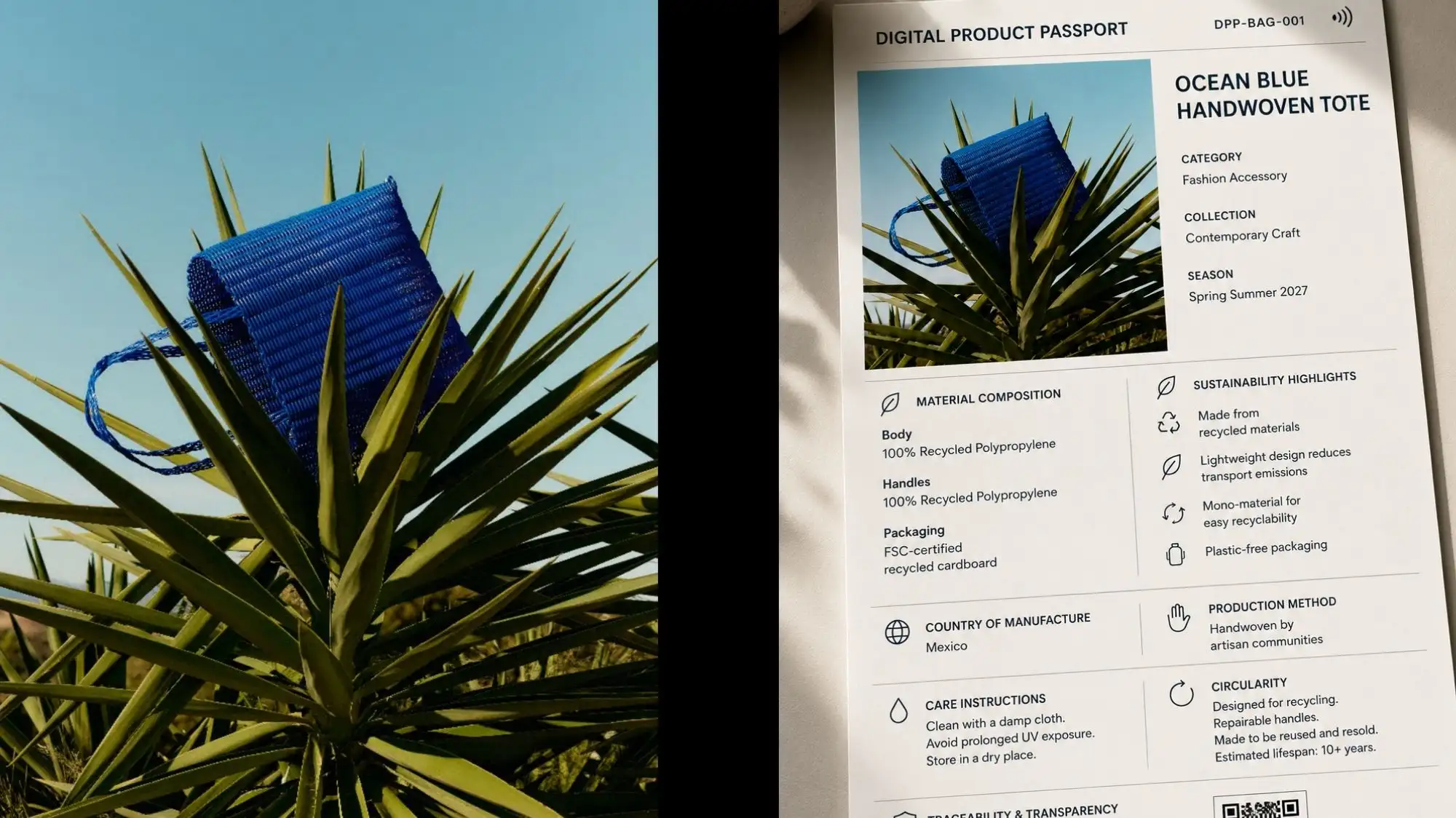
Driven by the European Union’s Ecodesign for Sustainable Products Regulation (ESPR), Digital Product Passports will fundamentally change how fashion products are designed, manufactured, sold, repaired, resold, and recycled. Yet the brands that will benefit the most are unlikely to be those treating DPPs as a legal obligation alone. Instead, competitive advantage will belong to businesses that view product transparency as a strategic business capability rather than a compliance exercise.
What Are Digital Product Passports and Why Do They Matter?
A Digital Product Passport is a standardized digital record connected to every product, typically through a QR code or similar identifier. It provides structured information about the garment throughout its entire lifecycle, including:
- Material composition
- Manufacturing origin
- Environmental impact
- Repair guidance
- Recycling information
- Product authenticity
- Care instructions
The objective extends beyond transparency. Digital Product Passports create a continuous flow of verified product information that supports circular business models while improving trust between brands, consumers, retailers and supply chain partners. As implementation progresses across Europe, companies selling within the EU will increasingly need reliable product-level data to support sustainability claims and regulatory requirements.
Digital Product Passports Are More Than a Compliance Requirement
Data Will Become Fashion’s Most Valuable Asset
Many organizations initially assume that implementing Digital Product Passports is primarily a technology project. In reality, technology represents only a small part of the challenge.

The real transformation concerns data quality.
Fashion companies often possess fragmented information distributed across suppliers, manufacturers, mills, dye houses and logistics partners. Collecting consistent, verifiable information across every production stage requires significant collaboration long before regulations become mandatory.
This shift places Trend Intelligence, sourcing, product development, sustainability and digital teams into much closer collaboration than ever before.
The brands investing today in stronger product intelligence, traceability and supplier integration will likely experience smoother regulatory transitions while building more resilient supply chains.
Designers Will Play a Strategic Role
One of the most overlooked aspects of Digital Product Passports is how deeply they affect product design.
Many of the future performance indicators measured through DPPs originate during the design phase. Fibre selection, material blends, trims, construction methods, durability and recyclability are all decisions made before manufacturing even begins.
This means Fashion Trend Forecasting, Material Intelligence and product development become increasingly connected.
Designers will no longer create products based solely on aesthetics and consumer demand. They will also influence regulatory readiness, circular performance and long-term product value.
For fashion businesses, this represents an important cultural shift where creativity and sustainability become integrated rather than separate disciplines.
How Digital Product Passports Create New Business Opportunities
From Product Ownership to Lifetime Customer Relationships
Perhaps the greatest opportunity created by Digital Product Passports has little to do with regulation.

Instead, DPPs allow brands to maintain an ongoing relationship with products long after the initial purchase.
A Digital Product Passport can become the gateway to:
- Authentication services
- Product care recommendations
- Repair programs
- Warranty management
- Certified resale
- Circular business models
- Customer engagement experiences
As second-hand fashion continues expanding globally, trusted product information becomes increasingly valuable. Verified digital identities simplify resale transactions while increasing consumer confidence regarding authenticity and product history.
Rather than ending at the point of sale, customer relationships can continue throughout the garment’s entire lifecycle.
Digital Product Passports and the Future of Fashion Trend Forecasting
Forward-looking fashion businesses should not consider Digital Product Passports as isolated sustainability initiatives.
Instead, they represent another layer of strategic product intelligence.
Combined with Trend Forecasting, consumer insights, material innovation and supply chain visibility, DPPs provide richer information that supports smarter product development and stronger business decisions.
As Fashion Trend Forecasting increasingly relies on measurable consumer behavior, transparency and lifecycle performance, Digital Product Passports will contribute valuable data for future collections, merchandising strategies and innovation planning.
Preparing Today Creates Tomorrow’s Competitive Advantage
The transition toward Digital Product Passports is already underway.

Waiting until regulations become fully enforceable may leave many organizations struggling with fragmented supplier information, incomplete traceability and outdated digital infrastructure.
The fashion companies that begin building reliable product data, improving supply chain transparency and integrating Digital Product Passports into their long-term innovation strategy will be significantly better positioned for the future.
Ultimately, Digital Product Passports are not simply about meeting regulatory expectations. They represent a new foundation for transparency, trust, circularity and intelligent product development, making them one of the most important strategic transformations shaping the future of the global fashion industry.
Views


Trend Forecasting Intelligence
C2 Trend Platform.
Structured trend forecasting for clarity, product direction, and collections aligned with future demand.
Trend Forecasting Intelligence