

How AI Is Changing Fashion Trend Forecasting, and Why Human Intelligence and Clarity Now Matter More Than Data
AI has made fashion trend information easier to find than ever. Brands can now get in minutes what used to take weeks of research. But more information has not made decisions easier. Designers, buyers and brand teams still have to choose what to develop, what to invest in and what to leave out, often with tight timelines and real commercial pressure.

At C2 Fashion Studio, a Trend Intelligence and decision intelligence studio based in Milan, we work with this tension every day. Our view is simple. Data has become abundant, and what has become rare is the human ability to interpret it with clarity. This article looks at what AI changes in trend forecasting, what it cannot do, and why human intelligence is now the deciding factor.
What Is AI Changing in Fashion Trend Forecasting?
AI can analyse runway images, social media, search behaviour and retail data at a scale no team could manage by hand. It spots patterns, groups visual themes and summarises what is happening across markets in seconds.
For research teams, that is a real and useful change.
Trend reporting vs. trend forecasting
It helps to separate two activities that are often confused:
- Trend reporting documents the present: what is already visible, popular and measurable.
- Trend forecasting anticipates the future: what is likely to emerge, how fast, and for whom.
AI is very strong at reporting, because it works from data that already exists. Forecasting starts earlier, with weak signals that are not yet in the data. It often means recognising a direction that moves away from the consensus. That kind of reading still depends on human experience.
Why more data can mean less clarity
Fashion culture now moves through many small online communities, each with its own aesthetic and vocabulary. New micro-trends appear every week. When everything gets tracked, everything can look urgent.
AI also tends to amplify what is already most visible. So many brands end up seeing the same trends at the same moment. For a creative team, that brings more options, more doubt and less confidence about where to focus. The real problem is not a lack of information. It is too much noise.
Why Do Human Intelligence and Clarity Matter More Than Data?
Data shows what is happening. Human intelligence explains what it means, and clarity turns that meaning into a decision. In trend forecasting, the most valuable judgments are still made by people:
- Commercial judgment: telling the difference between an idea that is visible online and one that will actually sell.
- Cultural reading: understanding the context, mood and values behind a signal, not just how often it appears.
- Curation: deciding which few signals deserve attention out of thousands.
- Timing: knowing whether a direction is ready to act on now or should be watched for later.
None of this rejects technology. It recognises that a decision is only as good as the interpretation behind it.
From “What’s next?” to “What matters to us?”
Brands no longer only ask what is coming next. They want to know what is relevant to their brand, their customers and their season. A colour, a silhouette or a material can be essential for one brand and irrelevant for another.
Answering that needs context: knowledge of collections, production realities, retail timing and the people who will wear the product. That is why we treat trend forecasting as decision support. The aim is not to predict everything. It is to help teams decide with confidence.
How C2 Fashion Studio Combines Human Intelligence and AI
At C2 Fashion Studio, AI supports our research but does not replace our judgment. Our process combines cultural analysis, behavioural observation, material research and scenario building. Each signal is assessed for maturity, potential impact and uncertainty. We keep documented data, our interpretation and future hypotheses clearly separate, so clients always know what is fact and what is vision.
Our research is delivered through the C2 Trend Platform, a professional membership for fashion and design teams. It includes:
- Visionary Forecasts: long-range direction, 18–24 months ahead
- Short Forecasts: near-term intelligence, 6–12 months ahead
- Special Reports on categories, materials and emerging themes
- Daily Insights on current signals and cases
- Trends Incubator for early-stage developments and innovation
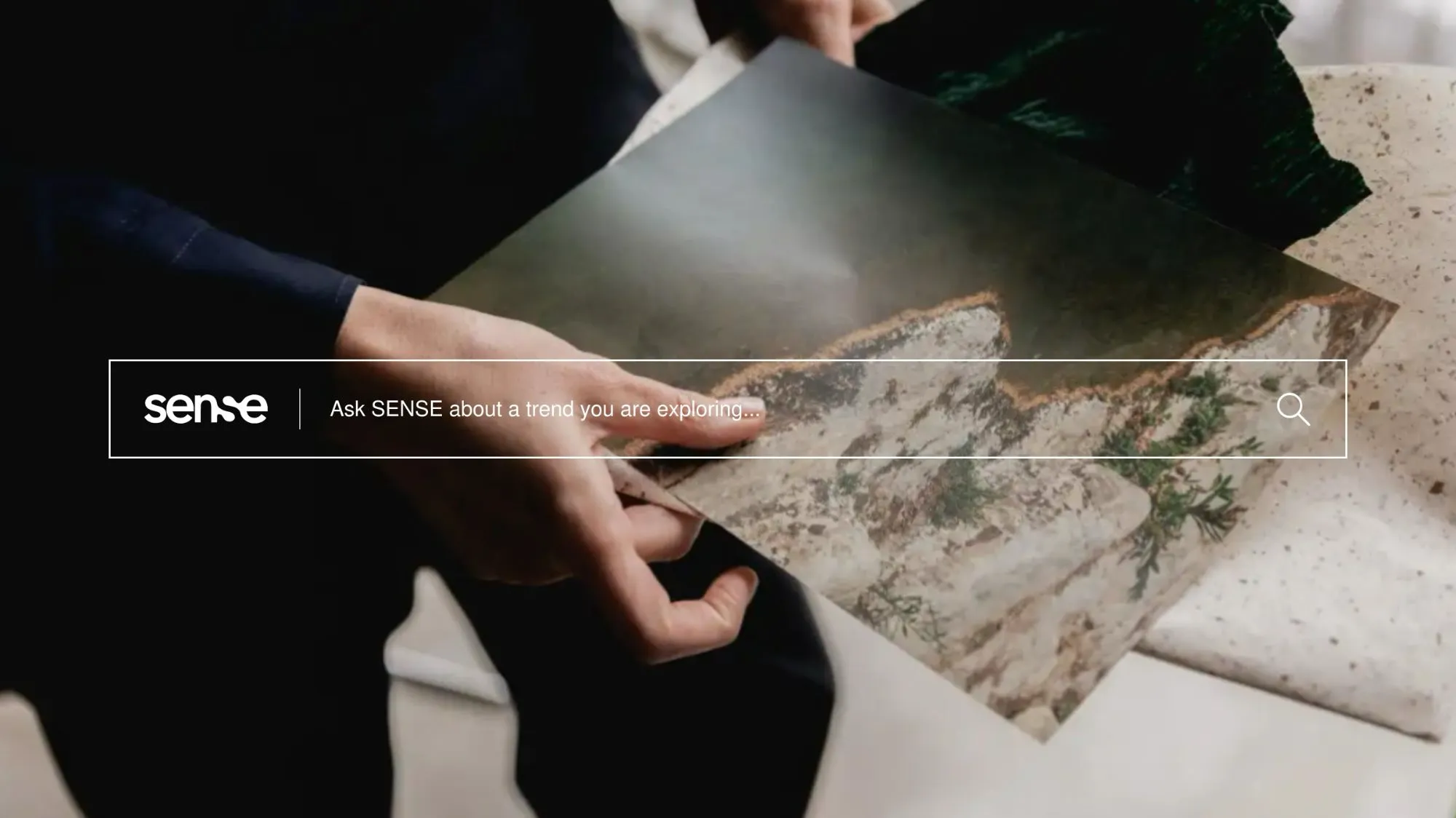
The platform covers fashion, activewear, beauty, footwear, knitwear, accessories and design. Inside it, Sense, our AI assistant, answers only from C2’s own research and not from the open web. Members get the speed of AI, backed by human-curated intelligence.
C2 Fashion Studio was founded by Cristina Capucci, a creative director, trend forecaster and fashion photographer. Her photography has appeared in Vogue, Elle, Interview and GQ, and she spent years working inside fashion manufacturing. She knows the industry from the creative side and from the operational side. Her C2 Clarity Intelligence Method™ is the basis of how we turn observation into clear direction.
Frequently Asked Questions
1. Can AI replace human trend forecasters in fashion and design?
No. AI is excellent at analysing and summarising existing trends. Forecasting, though, means judging weak signals, commercial potential, timing and brand fit, and those decisions need human intelligence. AI works best as a research tool that supports expert judgment.
2. What is the difference between trend reporting and trend forecasting?
Trend reporting documents what is already happening and visible. Trend forecasting anticipates what is likely to emerge and when. Reporting describes the present; forecasting helps brands make decisions about the future.
3. What is Trend Intelligence in fashion?
Trend Intelligence is the process of turning cultural, consumer and market signals into clear, actionable decisions for a specific brand. It combines research, curation and human interpretation, so teams know which trends matter to them and why.
4. How does C2 Fashion Studio use AI in its research?
C2 Fashion Studio uses AI to support research and synthesis, while human analysts check, interpret and curate every finding. Sense, the AI assistant on the C2 Trend Platform, answers only from C2’s own research.
5. Who is the C2 Trend Platform for?
The C2 Trend Platform is for designers, brands, creative teams, design studios and retail professionals in fashion and design who need reliable Trend Forecasting Solutions, from long-range direction to daily insights.
AI Transparency Disclaimer
C2 Fashion Studio may use AI-generated or AI-assisted content in selected texts and visuals, reviewed and curated in accordance with the EU AI Act.
Views


Trend Forecasting Intelligence
C2 Trend Platform.
Structured trend forecasting for clarity, product direction, and collections aligned with future demand.
Trend Forecasting Intelligence