

Circularity 2026: Fashion Design Strategies for Maximum Material Lifespan
By 2026, the fashion industry is entering a new phase where circularity is no longer driven solely by sustainability goals or brand commitments. Rising raw material costs, increasing inventory risks, evolving consumer expectations, and new European regulations are collectively reshaping how products are designed, manufactured, and valued.
At the center of this transformation is the European Union’s ambition to build a more resilient and resource-efficient textile industry. Durability, repairability, recyclability, and transparency are rapidly becoming essential design requirements rather than optional sustainability initiatives.

At C2 Fashion Studio, we see this shift as a pivotal inflection point in Fashion Trend Forecasting and Material Intelligence, where regulatory pressure, changing consumer behavior, and emerging Fashion Trends converge to create a new aesthetic and economic logic centered on longevity.
The future of fashion is no longer defined solely by what is new. Increasingly, it is defined by what lasts.
From Fast Turnover to Long-Life Design
The Ecodesign for Sustainable Products Regulation (ESPR) is redefining what can legally be placed on the EU market, extending its scope to textiles as a priority product group because of their significant environmental footprint.
By 2030, the EU Strategy for Sustainable and Circular Textiles aims for all textile products sold within the European market to be durable, repairable, recyclable, largely made from recycled fibres, and free from hazardous substances.
Under ESPR, product-specific ecodesign requirements will establish measurable performance criteria for durability, repairability, and recyclability. This represents a fundamental shift away from voluntary sustainability claims toward binding technical standards.
Preparatory work and implementation activities are unfolding throughout 2026, making this a critical transition period for fashion brands, manufacturers, and design teams seeking to align with future compliance requirements.
What “Maximum Material Lifespan” Really Means
Within the emerging EU framework, longevity is no longer a vague sustainability concept. It is becoming a measurable design parameter.
Requirements focus on durability, reusability, repairability, and fibre-to-fibre recyclability. Products will increasingly be evaluated according to how long they maintain performance, how easily they can be repaired, and how effectively they can re-enter material cycles at the end of their useful life.

Emerging proposals include robustness assessments that measure visual degradation, spirality, dimensional stability, and overall appearance retention after standardized wash cycles. In practice, the way a garment looks after ten or twenty wears may soon become a regulated performance indicator rather than a subjective quality perception.
At the same time, recyclability metrics linked to material composition and garment construction are being developed to assess how efficiently products can be processed at end of life.
Ban on Destruction and the New Logic of Inventory
From 2026 onward, the EU will progressively restrict and ultimately prohibit the destruction of unsold apparel, clothing accessories, and footwear.
For decades, overproduction has been absorbed through discounting, incineration, or disposal. Under the new framework, companies will face increasing disclosure obligations regarding unsold inventory, introducing both compliance requirements and reputational risks.
This changes the economics of fashion.
Excess inventory is no longer simply a financial burden; it becomes a strategic risk. Brands are therefore being pushed toward more accurate forecasting, better demand planning, smaller production runs, and products designed to maintain value across longer periods.
For Trend Intelligence, this marks a clear shift away from disposable consumption models and toward systems where longevity, adaptability, and residual value become central design objectives.
New European Standards on Textile Longevity
The EU Textile Strategy addresses the entire product lifecycle, from design and production to use, repair, reuse, and recycling.
Policy objectives focus on improving durability, reparability, reusability, and fibre-to-fibre recyclability while simultaneously increasing recycled content and limiting substances of concern.
As ESPR replaces the previous Ecodesign Directive, textiles will be governed under a broader framework capable of introducing both horizontal requirements, such as durability standards, and category-specific performance thresholds.
These requirements are expected to be supported by digital product information systems that provide consumers with greater visibility into product lifespan, repairability, composition, and environmental performance.
Durability, Repairability and Robustness Scores
Emerging guidance points toward measurable durability indicators including tear strength, seam resistance, colour fastness, abrasion resistance, and dimensional stability.
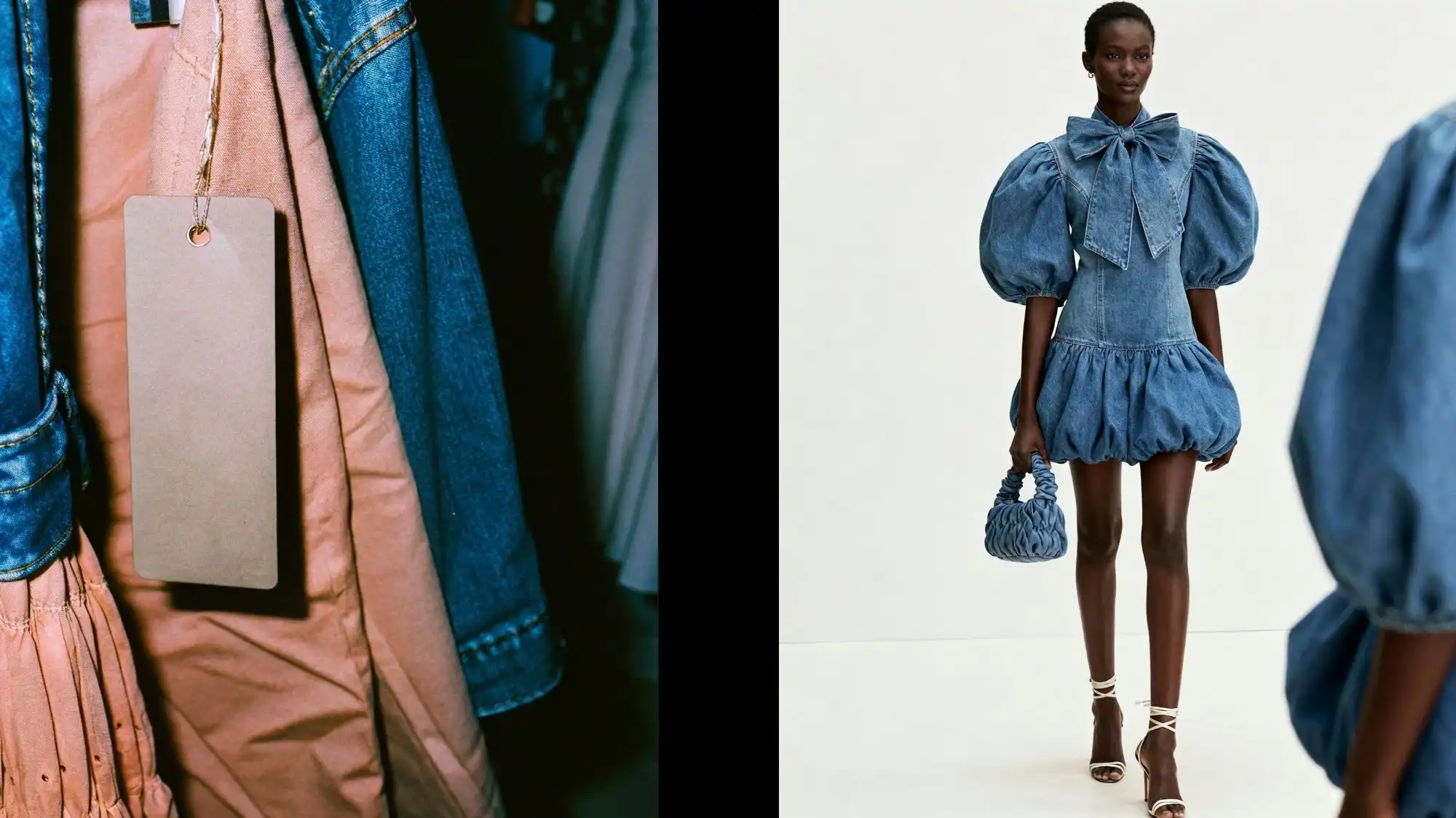
Particular attention is being given to categories such as denim, outerwear, workwear, knitwear, and performance apparel where product longevity plays a critical functional role.
The concept of a robustness score is gaining attention as a potential method for evaluating garments based on their performance after repeated washing and wear cycles.
Such metrics effectively transform quality into compliance.
Products designed around short life cycles, weak construction methods, excessive material fragility, or non-repairable components may struggle to meet future regulatory expectations.
For designers, creativity must increasingly coexist with measurable performance standards.
Recyclability and Recycled Content as Design Inputs
The EU textile strategy places significant emphasis on fibre-to-fibre recyclability and circular material flows.
Products will increasingly need to be designed for disassembly, material separation, and efficient recovery.
Complex multi-material constructions, difficult-to-separate laminates, and incompatible fibre combinations are likely to face growing scrutiny, while mono-material systems and clearly separable constructions gain strategic value.
Mandatory recycled fibre content is also expected to become an important component of future requirements.
This creates a dual design challenge: garments must incorporate recycled materials today while remaining compatible with future recycling systems tomorrow.
Circularity therefore becomes an engineering requirement rather than a marketing narrative.
Transparency, Traceability and Information Requirements
Performance alone is no longer sufficient.
Transparency and traceability are becoming equally important pillars of the emerging regulatory landscape.
The ESPR framework anticipates digital product information tools capable of communicating durability, repairability, recycled content, material composition, and substances of concern.
For brands, this transforms storytelling.
Product passports, repair instructions, care guidance, and material transparency become integral components of the customer experience rather than hidden technical documentation.

For consumers, these tools create greater confidence in sustainability claims while supporting more informed purchasing decisions.
The Rise of the Lifetime Consumer
Alongside regulatory transformation, consumer behavior is evolving rapidly.
A growing segment of consumers is shifting attention away from short-term novelty and toward long-term value.
Instead of asking simply whether a product is fashionable, consumers increasingly evaluate how long it will last, how easily it can be repaired, whether it can be resold, and how effectively it retains value over time.
This emerging “Lifetime Consumer” measures quality through longevity rather than frequency of replacement.
For younger generations in particular, ownership is becoming more fluid. Products are expected to move across multiple life cycles through resale, repair, rental, and refurbishment systems.
As a result, durability itself is becoming a desirable product attribute and a powerful differentiator.
This evolution creates new opportunities for brands capable of combining strong aesthetics with measurable long-term performance.
Design Strategies for Maximum Material Lifespan
According to C2 Fashion Studio, these regulatory developments should not be viewed as limitations but as powerful signals for Fashion Trend Forecasting, Trend Intelligence, Consumer Behavior analysis, and Material Intelligence.
The future belongs to brands capable of designing around material time rather than seasonal novelty.
In this context, Circularity 2026 becomes a design brief: how can materials, construction methods, business models, and consumer experiences be orchestrated to maximize the useful life of products while preserving desirability, profitability, and brand identity?
Strategy 1: Robust Aesthetics and Future-Proof Silhouettes
Designing for longevity starts with aesthetics capable of remaining relevant across multiple style cycles.
C2 Fashion Studio identifies a growing Trend Forecasting direction centered around robust aesthetics: durable materials, reinforced construction methods, adaptable silhouettes, and timeless design codes that remain relevant beyond seasonal fluctuations.
Examples include trench coats with replaceable linings, repair-friendly denim, modular outerwear systems, and knitwear engineered to age gracefully over time.
Strategy 2: Design for Repair, Reuse and Services
Repairability is becoming a strategic opportunity rather than an afterthought.
Brands are increasingly exploring repair services, alteration programs, resale ecosystems, refurbishment initiatives, and modular product architectures.

Visible mending, replaceable hardware, repair guides, and garments designed with future interventions in mind are likely to become increasingly common expressions of circular design.
Strategy 3: Material Intelligence and Circular Storytelling
Material Intelligence sits at the heart of Circularity 2026.
Fibres must now be evaluated not only for aesthetics, comfort, and performance but also for durability, repair behavior, traceability, and recyclability.
According to C2 Fashion Studio, this will accelerate the adoption of mono-material systems, advanced recycled fibres, traceable supply chains, and next-generation bio-based materials compatible with circular recovery systems.
Circular storytelling then becomes the bridge between technical innovation and consumer understanding, translating material choices into meaningful narratives about longevity, value, and future responsibility.
The Future of Fashion Is Built Around Longevity
Circularity is no longer simply a sustainability conversation.
It is becoming a design framework, a business strategy, and an emerging source of competitive advantage.
As regulatory requirements evolve and consumer expectations shift, durability, repairability, recyclability, and transparency will increasingly define product value.
For Fashion Trend Forecasting, the most important signal is clear: the future of fashion will not be measured only by how products enter the market, but by how long they remain relevant, functional, and valuable once they are there.
C2 Fashion Studio: Fashion Trend Forecasting, Trend Intelligence and Future Design Strategies
According to C2 Fashion Studio Trend Forecasting, Circularity 2026 represents far more than a sustainability transition. It signals a fundamental redesign of how fashion products are conceived, developed, evaluated, and valued throughout their lifecycle. As durability, repairability, recyclability, and transparency become central drivers of product development, brands must integrate Trend Intelligence, Consumer Behavior analysis, and Material Intelligence into every stage of decision-making.
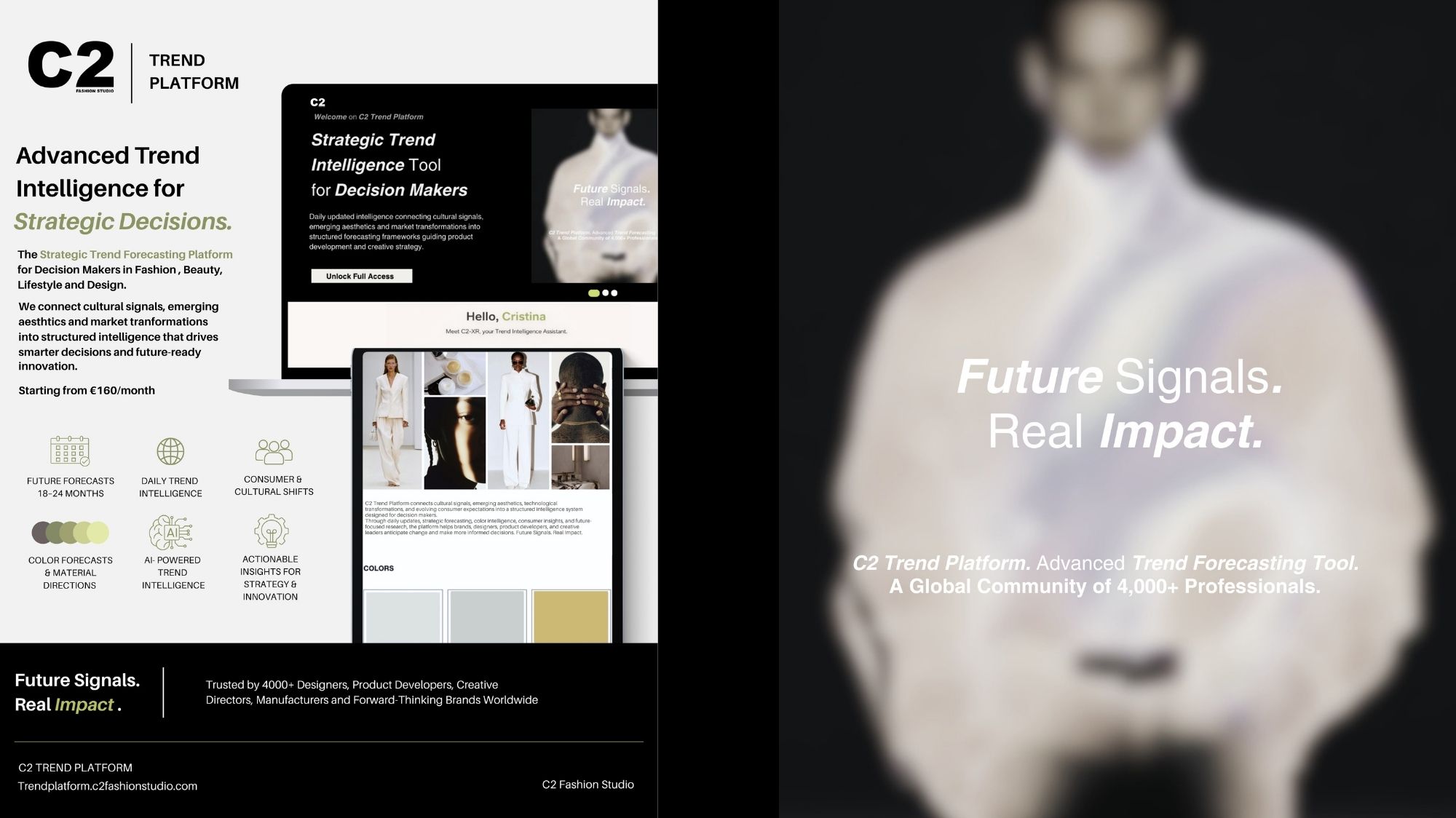
Understanding these shifts before they become industry standards allows businesses to reduce risk, identify emerging opportunities, and build products aligned with future market expectations. Through long-range Fashion Trend Forecasting, Design Trends analysis, Material Intelligence research, and strategic consumer insights, C2 Fashion Studio helps brands navigate the evolving landscape of fashion, sustainability, innovation, and product longevity.
To explore exclusive trend forecasts, material directions, consumer insights, color forecasts, and strategic reports shaping the future of fashion, join the C2 Trend Platform and gain access to actionable intelligence designed for informed and confident decision-making.
Frequently Asked Questions
Why is Circularity 2026 becoming a strategic priority for fashion brands?
Circularity 2026 is being driven by a combination of regulatory changes, evolving consumer expectations, and increasing pressure on resources and supply chains. New European requirements around durability, repairability, recyclability, and transparency are transforming circularity from a sustainability initiative into a core business and product development strategy. Brands that adapt early can reduce risk, improve product value, and strengthen long-term competitiveness.
How will EU textile regulations influence future Fashion Trend Forecasting?
Future Fashion Trend Forecasting will increasingly integrate regulatory intelligence alongside consumer behavior, cultural shifts, and design innovation. Product longevity, material traceability, repairability, and recyclability are becoming critical design parameters that influence aesthetics, materials, construction methods, and business models. Trend Intelligence will therefore focus not only on what consumers desire but also on what future regulations require.
What role does Material Intelligence play in Circularity 2026?
Material Intelligence is becoming essential for designing products that meet future durability and recyclability standards. Brands must understand how fibres, finishes, constructions, and manufacturing processes impact product lifespan, repair potential, and end-of-life recovery. Material selection is no longer based solely on appearance and performance but also on circularity and compliance requirements.
Which fashion categories will be most affected by durability and repairability requirements?
Categories such as denim, outerwear, knitwear, activewear, workwear, footwear, and accessories are expected to face increasing scrutiny regarding durability and product performance. However, all fashion products sold within the European market will progressively be influenced by requirements related to longevity, transparency, recycled content, and recyclability.
How can brands prepare for the future of circular fashion and product longevity?
Brands should begin integrating Trend Intelligence, Consumer Behavior analysis, and Material Intelligence into their product development process today. Investing in durable materials, repair-friendly construction, transparent supply chains, adaptable product design, and circular business models will help companies align with future market expectations and emerging regulations while creating long-term value for consumers.
Views


Trend Forecasting Intelligence
C2 Trend Platform.
Structured trend forecasting for clarity, product direction, and collections aligned with future demand.
Trend Forecasting Intelligence