

Probiotic Clothing Technology and Skin Microbiome Fashion Innovation
Do probiotic clothes really improve skin health?
Yes—but not in the simplistic, beauty-marketing sense often implied. Probiotic clothing does not “heal” the skin or replace skincare. Its real value lies in something far more structural: the ability to support the skin microbiome, reduce odour-causing bacteria, and rebalance the continuous interaction between fabric, sweat, and skin.

This nuance explains why questions such as “Do probiotic clothes work?” and “Can clothing affect the skin microbiome?” are rapidly growing in search behaviour. The curiosity is no longer superficial. It reflects a broader cultural shift toward understanding fashion as an active system, not a passive surface.
According to C2 Fashion Studio, probiotic clothing represents a Fashion Trend emerging at the intersection of biotechnology, wellness, and advanced material innovation. Far from being a gimmick, it is becoming strategically relevant for future collections because it challenges a long-standing assumption of the industry: that textiles are biologically neutral.
Understanding the skin microbiome and textiles
Why fabrics are not neutral?
The human skin hosts trillions of microorganisms—bacteria, fungi, and viruses—that collectively form the skin microbiome. This ecosystem plays a fundamental role in barrier function, immune defence, inflammation control, and body odour regulation. Disruptions to this balance are linked to irritation, sensitivity, and malodour.
Textiles are in constant contact with this ecosystem. They absorb sweat, trap heat, collect bacteria, and influence which microbial populations thrive. From a scientific standpoint, clothing is not a passive layer—it is an environmental factor acting on the skin microbiome.

Historically, the industry responded to this interaction through antimicrobial finishes, often based on silver ions or chemical biocides. While effective at reducing odour, these treatments indiscriminately kill bacteria, potentially disrupting microbial balance and raising environmental and regulatory concerns.
Probiotic clothing emerges as a fundamentally different response.
What are probiotics in clothing?
Probiotic textile technology explained
Probiotic clothing refers to garments engineered with beneficial bacteria, bacterial spores, or microbiome-supportive systems embedded into the textile structure. These microorganisms are typically encapsulated or protected to remain stable during storage and washing.
Activation occurs through body heat, moisture, and friction. When the garment is worn—especially in sweat-prone areas—the probiotics become active and interact with the skin’s microbial ecosystem.
Crucially, probiotic textiles are designed to support microbial balance rather than eliminate microbes altogether. This aligns with contemporary dermatological understanding: skin health depends on diversity and equilibrium, not sterility.
Skin II: biodesign as fashion research
Probiotics placed where the body needs them
One of the most cited experimental projects in this field is Skin II, developed by designer and textile researcher Rosie Broadhead in collaboration with microbiologist Chris Callewaert, a leading expert on the skin microbiome.
Skin II explores probiotic clothing not as a mass-market product, but as research-driven fashion design. The project strategically places encapsulated probiotic bacteria in garment zones prone to sweat—such as the underarms and back. When exposed to moisture, the bacteria become active and begin competing with odour-causing microorganisms.

The concept is deliberately precise: probiotics are not scattered across the entire garment, but applied where microbiome imbalance is most likely to occur. This targeted approach reflects a scientific understanding of how and where textiles interact most intensely with skin biology.
Skin II does not promise cosmetic transformation. Its value lies in demonstrating that fashion can host living systems and engage with the body at a biological level—opening a new design territory between apparel, science, and health.
Coperni and the rise of “carewear”
Probiotic technology enters fashion collections
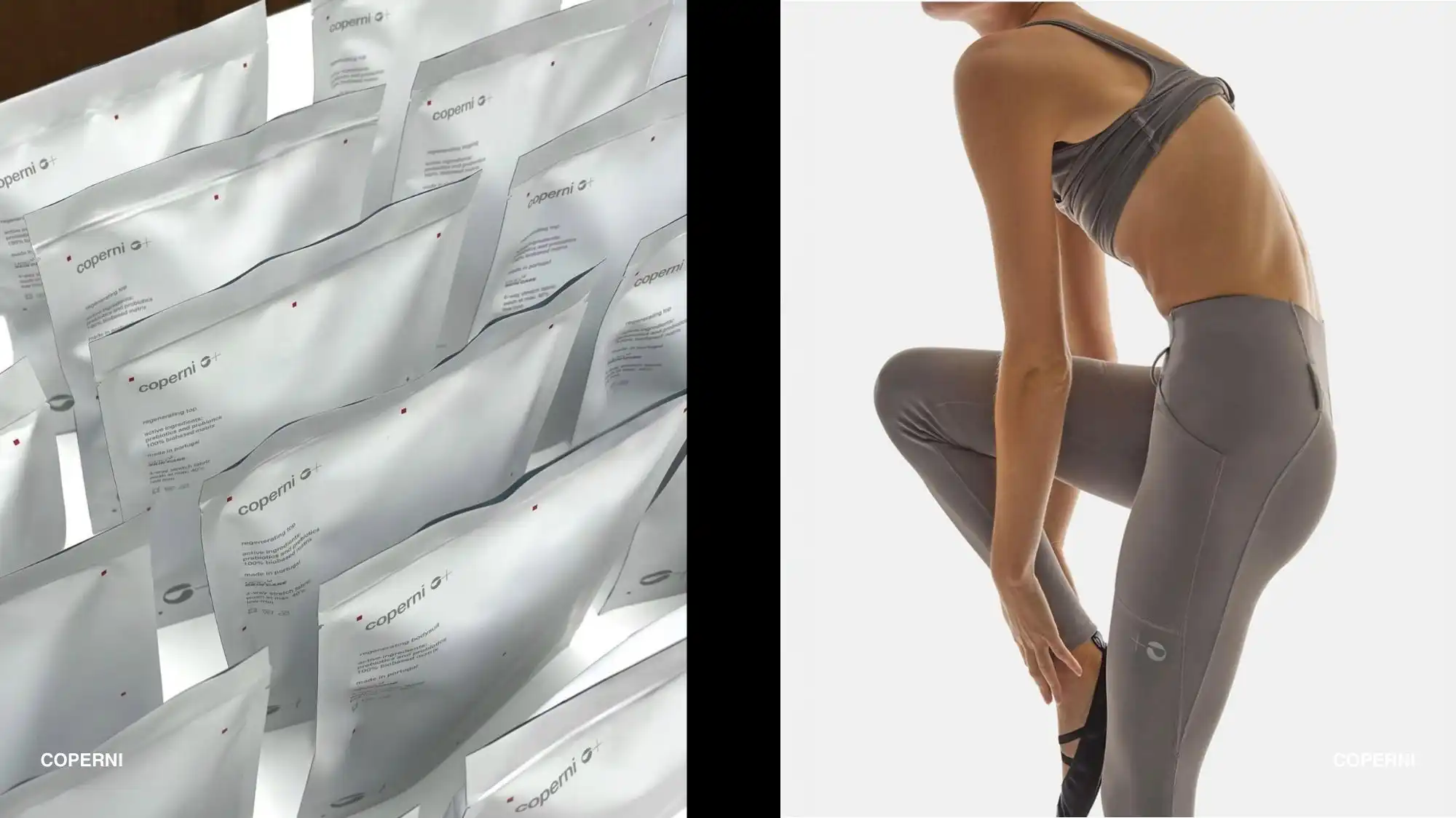
While Skin II operates within experimental research, probiotic textiles have begun to appear in commercial fashion contexts. A notable example is the C+ Carewear line by Coperni, which integrates a patented synbiotic system—combining probiotics and prebiotics—into bio-based fabrics.
In this case, the technology is designed to release beneficial components gradually during wear, activated by heat and movement. The objective is not medical treatment, but microbiome support: helping maintain skin comfort, balance, and freshness over time.
Coperni’s approach signals a shift in how fashion positions functionality. The garment is framed not as performance wear or medical apparel, but as an extension of daily self-care—what the brand describes as “wearable care.”
From a Trend Intelligence perspective, this marks an important transition: probiotic clothing moves from speculative design into luxury-adjacent, consumer-facing fashion, without abandoning conceptual depth.
Probiotics versus antimicrobial finishes
A philosophical shift in material design
The distinction between probiotic and antimicrobial textiles is not merely technical—it is ideological.
Antimicrobial finishes aim to control the body by suppressing biological activity. Probiotic systems aim to collaborate with biology, supporting balance rather than enforcing sterility. This mirrors a broader cultural movement away from domination toward regeneration and co-existence—seen across wellness, food systems, and now fashion.
According to C2 Fashion Studio, this philosophical shift is central to why probiotic textiles resonate as a future-facing Fashion Trend rather than a short-lived innovation.
Scientific limits and open questions
What research still needs to prove?
Despite growing interest, probiotic clothing remains an emerging field. Key scientific challenges include:
- Ensuring microbial viability after repeated washing
- Measuring long-term effects on diverse skin types
- Establishing standardized testing protocols

Current research supports functional benefits—particularly odour reduction and microbiome modulation—but large-scale, long-term clinical studies are still developing.
This uncertainty does not weaken the trend. On the contrary, it positions probiotic clothing within a broader research-driven innovation cycle, where fashion becomes a site of experimentation rather than instant solutions.
Why probiotic clothing matters for fashion’s future?
From a Trend Forecasting perspective, probiotic textiles signal a decisive move toward bio-active fashion systems—garments that interact with the body on a biological, not just aesthetic, level.
According to C2 Fashion Studio, this evolution reflects changing consumer expectations: fashion is increasingly asked to provide meaning, function, and responsibility, without sacrificing design integrity.
Probiotic clothing does not replace skincare.
It redefines what clothing can be.
It marks the transition from passive garments to living interfaces, where fashion, science, and the human body converge—quietly, intelligently, and with long-term cultural relevance.
Explore the Probiotic Activewear Trend for Spring Summer 2027 on C2 Trend Platform
For Spring Summer 2027, probiotic activewear emerges as a key fashion trend driven by heat, movement, and prolonged skin contact. As temperatures rise, garments designed to support the skin microbiome become increasingly relevant, activating through sweat and friction to reduce odour and enhance comfort without chemical finishes.
According to C2 Fashion Studio, this evolution reflects a shift toward bio-active performance systems, where activewear moves beyond breathability and moisture control to biological interaction. On the C2 Trend Platform, this trend is decoded through advanced trend forecasting and trend intelligence, highlighting materials, technologies, and design directions shaping next-generation wellness-driven activewear.
Views


Trend Forecasting Intelligence
C2 Trend Platform.
Structured trend forecasting for clarity, product direction, and collections aligned with future demand.
Trend Forecasting Intelligence